
Have you been feeling unsteady on your feet lately?
Difficulty maintaining your balance can show up in subtle ways — feeling lightheaded when you stand up, needing to hold onto furniture while walking, or worrying that you might fall.
Balance is more complex than most people realize.
It depends on your brain’s ability to process signals from your eyes, inner ears, muscles, and joints.
When one of these systems isn’t working properly, you may feel dizzy, off-balance, or unstable.
Left unaddressed, balance problems can increase your risk of falls and limit your confidence in daily activities.
The good news is that many balance issues can improve with the right evaluation and targeted therapy.
In this article, we’ll explore:
- What balance actually is and how it works
- Common signs and symptoms of balance problems
- Conditions that may cause dizziness or instability
- And how physical therapy can help you feel steady and safe again
Let’s take a closer look at what might be affecting your balance — and what you can do about it.
What Is Balance?
Balance is the ability to remain steady when you walk, stand, sit, or perform any movements.
In order for you to maintain your balance, your senses and nervous system need to work together.
Your brain gathers signals from your eyes, ears, muscles, and other parts of your body.
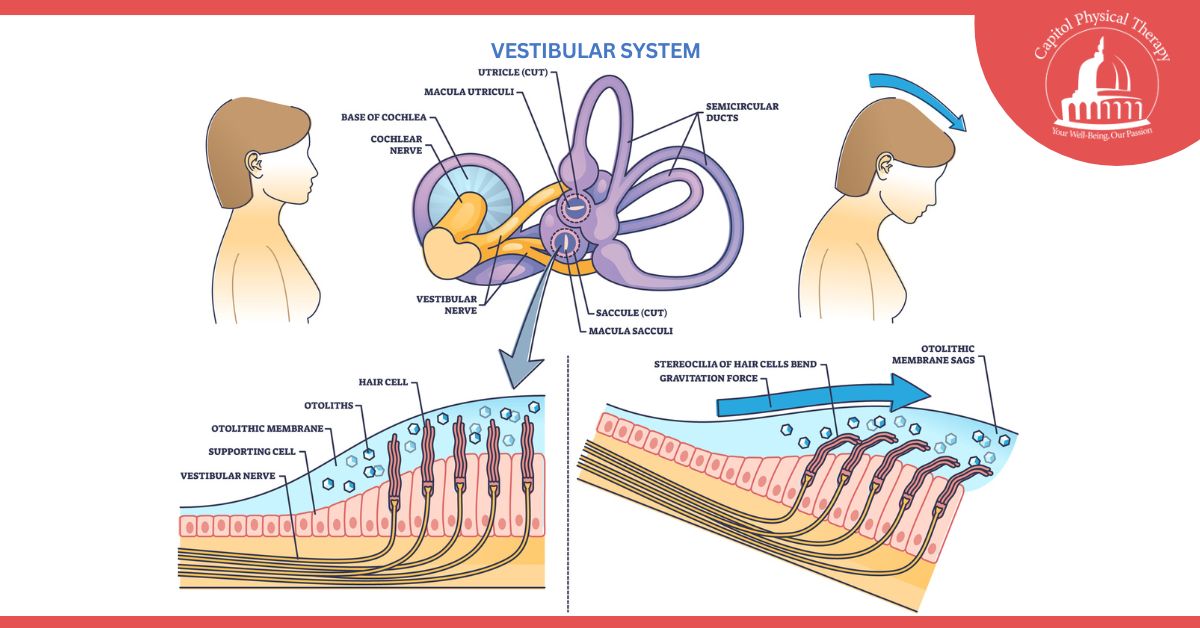
Within your ears is your vestibular system, which allows you to sense motion and gravity.
Your eyes allow you to track your surroundings so that you’re able to position your body within a particular space.
And your muscles, skin, and joints provide pressure and movement signals.
Your brain gathers and utilizes information from all of these sources to help position you and maintain your balance.
How To Know If You Have Balance Problems?
Balance problems occur when one of your sensory systems isn’t functioning properly.
If one or more of your senses isn’t sending the right signals to your brain, it can result in being unsteady.
If you have balance problems you may experience the following symptoms:
- Dizziness
- Lightheadedness
- Vertigo
- Blurred vision
- Unsteadiness when walking, standing, or sitting
- Frequently falling, or feeling as if you are about to fall
People typically have less balance issues when sitting or standing still, which is known as static balance.
Balance problems occur more commonly with dynamic balance.
Dynamic balance refers to the balance an individual has when they move or try to do multiple things at once.
However, if you have any type of balance problem, it can put you at a higher risk of falling and getting hurt.
Balance problems can also make you avoid certain activities and movements that may trigger symptoms.
This can cause muscle weakness and cause further complications.
You may also experience mental health issues due to frustration and anxiety regarding the condition and its impact on your life.
What Causes Balance Problems?
There are numerous factors and conditions that can cause balance problems.
It’s more common with age, however issues with balance can affect anyone.
Let’s take a more in-depth look at what conditions are typically associated with balance problems, other potential causes, and how physical therapy can help.
1. Vestibular Disorders
Your vestibular system is found mostly within your inner ear and gives your brain information regarding movement.
It’s responsible for helping you:
- Maintain your balance
- Stabilize your head and body
- Maintain your posture
- Stabilize your vision while moving
When there is an issue with your vestibular system, the brain receives incorrect signals about your movements and position.
This is known as a vestibular disorder and can cause you to experience symptoms such as:
- Dizziness
- Vertigo
- Balance problems
- Lightheadedness
- Frequently falling
- Blurred vision
- Tightness or pain in the neck
- Nausea and vomiting
- Headaches
- Anxiety
- Motion sickness
- Focus issues
- Fatigue
- Heart palpitations
Vestibular disorders can be caused by a number of things, including:
- Inner ear infections
- Inflammation
- Traumatic injuries
- Age
- Autoimmune conditions
- Neurological conditions
If you suspect that you have a vestibular disorder, working with a licensed physical therapist can help.
A thorough evaluation can identify the underlying cause of your symptoms and guide a treatment plan focused on improving balance, reducing dizziness, and restoring function.
Vestibular rehabilitation programs are typically tailored to each individual’s specific needs and goals to support safe and effective recovery.
Common physical therapy treatments for vestibular disorders include:
- Habituation, to help you manage symptom triggers
- Gaze stabilization, to help you gain better control of your gaze
- Balance training, to help retain your balance and reduce the risk of falling
2. BPPV
Benign paroxysmal positional vertigo, otherwise known as BPPV, is an inner ear condition that causes vertigo.
Vertigo is the feeling that everything around you is spinning and swaying, which can cause you to lose your balance.
BPPV is not considered a life-threatening condition.
However, it can cause episodes of vertigo and symptoms such as:
- Dizziness
- Balance problems
- Nausea and vomiting
- Headaches
- Blurred vision
- Unsteadiness
- Nystagmus, or abnormal eye movements
This condition occurs when calcium carbonate crystals, a layer of material inside the tubes of your inner ear, break off and enter your semicircular canals.
This can affect the nerve endings in the inner ear.
As a result, your brain and eyes may have issues receiving the correct signals about your head’s position, causing vertigo.
Risk factors for BPPV may include:
- Head trauma
- Osteoarthritis
- Aging
- Inner ear infections
- Neurological conditions
- Chronic fatigue
- Sedentary lifestyle
- Diabetes
- Heart disease
- Allergies
- Genetics
Physical therapy for BPPV begins with determining if you have BPPV and what its underlying cause is.
From there, a physical therapist will assess your symptoms and triggers and devise a personalized treatment plan that includes various physical therapy strategies and exercises.
The aim of physical therapy for BPPV is to reduce your symptoms and improve your balance and posture.

3. Traumatic Brain Injuries
Traumatic brain injuries occur when the head experiences trauma and force is applied to your brain tissue.
This can significantly affect your brain’s function and impact your physical and emotional well-being.
Traumatic brain injuries can be caused by direct blows to the head, commonly after a fall or car crash.
A concussion is the most common type of traumatic brain injury.
Traumatic brain injuries may also be caused by:
- Hematoma
- Skull fracture
- Edema
There are also risk factors that can make you more susceptible to brain injuries, such as:
- Participating in sports
- Age
- Whiplash from an accident
- Neurological conditions
- Stroke
- Lung conditions
- Heart conditions
- Obesity
- Pregnancy
- Diabetes
- Huntington’s disease
- Multiple sclerosis
- Osteoarthritis
There are many symptoms of traumatic brain injury that vary in severity depending on age and the injury’s impact on the brain.
Symptoms of traumatic brain injury may include:
- Balance problems
- Shoulder pain
- Neck pain
- Upper back pain
- Sleep issues
- Muscle and body weakness
- Difficulty focusing
- Decreased spatial and physical awareness
- Memory issues
- Sensory issues
- Confusion
- Difficulty controlling emotions
If you or a loved one has experienced a traumatic brain injury, seek medical attention immediately.
Once the emergency has passed, physical therapy for traumatic brain injury (TBI) can help.
A physical therapist will assess your condition and implement an individualized treatment plan focusing on your specific capabilities, needs, and goals.
Physical therapy for traumatic brain injury can include:
- Education on assistive equipment
- Posture and flexibility programs
- Stretching techniques
- Physical exercise
- Patient and family education
- Balance therapy
- Alertness and responsiveness strategies
4. Parkinson’s Disease
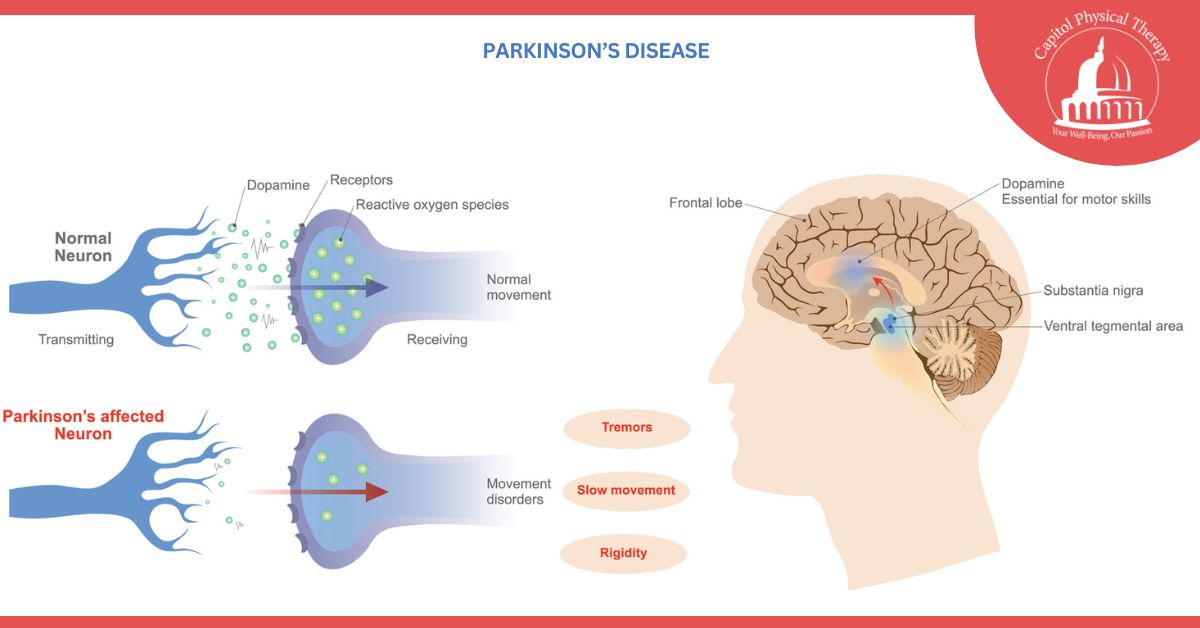
Parkinson’s disease is a neurological disorder that affects your nervous system.
This condition slowly breaks down and kills dopamine producing nerve cells in a part of your brain called the substantia nigra.
The reduction in dopamine creates a chemical imbalance that can significantly impact many of your bodily functions, such as balance, as well as cognitive function and mood regulation.
It isn’t clear what causes this.
However, some risk factors that may contribute to its development include:
- Exposure to environmental toxins
- Gender (men are at greater risk)
- Family history
- Aging
Symptoms of Parkinson’s disease vary depending on the severity of the condition.
The most common and noticeable symptoms are tremors and slowed movement.
Other common symptoms of Parkinson’s disease include:
- Smaller movements
- Muscle stiffness
- Chronic pain
- Sleep issues
- Balance problems
- Poor posture
- Difficulty regulating speech volume
- Difficulty swallowing or making facial expressions
- Bursitis
It’s a progressive, degenerative disease, meaning that symptoms get worse over time.
However, Parkinson’s disease physical therapy focuses on helping you manage symptoms and reduce the rate of progression.
A physical therapist will assess your bodily function and capabilities and create a treatment plan aimed at keeping you as active and mobile for as long as possible.
Physical therapy for Parkinson’s disease may include:
- Gait training therapy
- Strength building programs
- Pain management therapy
- Fall prevention strategies
- Fine motor skills development
- Education on assistive tools
You may also consider speech therapy for Parkinson’s disease.
5. Cervicogenic Migraines
A migraine is a neurological condition characterized by severe headaches.
A cervicogenic migraine is a type of migraine that originates from the cervical spine and neck rather than from the brain.
Symptoms of cervicogenic migraines can include:
- Dull, non-throbbing pain, particularly in the back of the head
- Nausea and vomiting
- Sensitivity to light and sound
- Dizziness or vertigo
- Balance problems
- Numbness or tingling
- Asymmetrical pain on the face
- Reduced range of motion in the neck
It’s also possible to experience symptoms days prior to a migraine episode, such as:
- Stiffness in the neck
- Food cravings
- Fatigue
- Hyperactivity
- Changes in mood
The exact cause of migraines isn’t known.
However, there are factors that can contribute to migraines and, by extension, cervicogenic migraines, including:
- Abnormal brain activity
- Genetics
- Family history
- Gender
- Neck dysfunction
- Muscle imbalances
- Musculoskeletal dysfunction
- Sensory sensitivity
- Hormonal imbalances
- Stress
- Sleep issues
- Certain medications
- Smoking or alcohol consumption
If you experience these, physical therapy for cervicogenic migraines can help reduce pain, improve your mobility, and manage recurring episodes.
Therapist driven mobilization, manipulation, and strengthening exercises can help improve your mobility and body function.
Your physical therapist will assess your symptoms and create a tailored approach using some common treatment methods, such as:
- Postural adjustment
- Physical exercise programs
- Vestibular therapy
- Transcutaneous neuromuscular electrical stimulations (TENS)
6. Others
Aside from the conditions we’ve discussed, there are numerous other potential causes for balance problems.
The inner ear is key for maintaining balance, so conditions that affect it can lead to balance problems, including:
- Vestibular neuritis
- Labyrinthitis
- Acoustic neuroma
- Ménière’s disease
- Persistent postural perceptual dizziness (PPPD)
There also other medical conditions that can cause balance problems, such as:
- Heart disease
- Motion sickness
- Orthostatic hypotension
- Peripheral neuropathy
- Alzheimer’s disease
- Multiple sclerosis
- Arthritis
- Stroke
- Spinal cord injury
- Diabetes
- Cognitive diseases
Regardless of the cause, if you feel unsteady or off balance, it’s a good idea to speak to a physical therapist.
How Can Physical Therapy For Balance Problems Help?
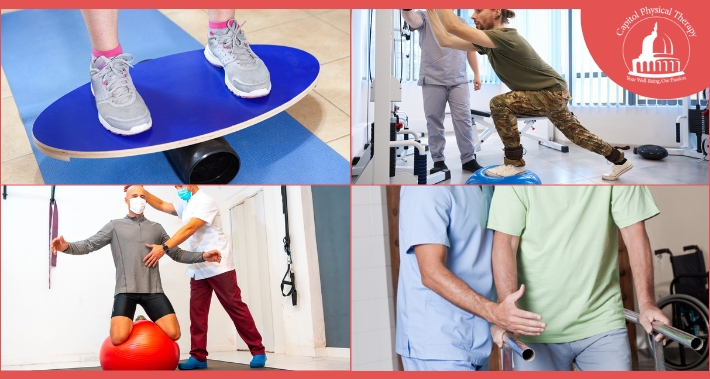
If you’re having balance problems, physical therapy can help.
A physical therapist will do a full assessment of your condition, evaluating your health history and symptoms.
Physical therapy approaches will depend on the severity of your balance problems and the underlying cause.
Your physical therapist will evaluate your physical ability and body functions, including:
- Balance
- Movement
- Visual tracking
- Coordination
- Strength
- Skin sensation
- Blood circulation
- Muscle and joint health
- Inner ear system
- Proprioception
They’ll then create a tailored physical therapy treatment plan to improve these systems and abilities based on your specific challenges and goals.
Overall the goal of physical therapy for balance problems is to help:
- Improve balance
- Improve mobility
- Improve strength
- Improve movement
- Improve flexibility and posture
- Increase physical activity levels
- Decrease the risk of falling
- Decrease the fear of potentially falling
A physical therapist can also provide you and your family with education and support resources.
Depending on your condition, they may help you learn how to use assistive tools and devices to keep you more mobile and active.
Ultimately, physical therapy for balance problems can help you manage your condition, improve your mobility, and improve your independence and quality of life.
Book Your Appointment With Our Physical Therapy Clinic Today
Balance problems can feel unsettling — but they don’t have to control your life.
With the right physical therapy plan, you can improve stability, reduce dizziness, and significantly lower your risk of falls.
At Capitol Physical Therapy, our team takes the time to identify the root cause of your symptoms and build a personalized program designed to restore your confidence and keep you safely on your feet.
Whether your balance challenges are new or ongoing, we’re here to help you move with greater ease, strength, and independence.
With two convenient locations in Washington, DC and Upper Marlboro, MD, expert care is always within reach.
Schedule your appointment with Capitol Physical Therapy today and start feeling steadier, safer, and more in control of your movement.
1100 H St NW Suite 1100,
Washington, DC 20005
- https://g.page/capitolptdc
9560 Pennsylvania Ave. # 202,
Upper Marlboro, MD 20772
- https://goo.gl/maps/zjL4NnnuThRhrcS86
Capitol Physical Therapy offers orthopedic and other pain related solutions, with our versitile team of physical therapists in Washington, DC and Upper Marlboro, MD