
Knee injuries can be frustrating and they have a way of interrupting your life in all the wrong ways.
From dislocations and fractures to knee bursitis and ACL tears, there’s no shortage of knee issues that can limit your movement and make everyday activities more difficult.
While prevention is always ideal, the reality is that injuries can still happen even with the best intentions and habits.
Fortunately, a physical therapist can play a valuable role not only in recovery but also in helping prevent future injury.
In this article, we’ll take a closer look at meniscus tears — a common knee injury — including what they are, how they happen, and how physical therapy can support your healing.
Even if you’re dealing with a different type of knee condition, the strategies and insights covered here can still apply.
Let’s take a look at what’s going on inside your knee and how to help it heal.
What Is Your Meniscus?
Your knee isn’t a single component, but rather a collection of bones, cartilage, ligaments, tendons, and bursae that support each other.
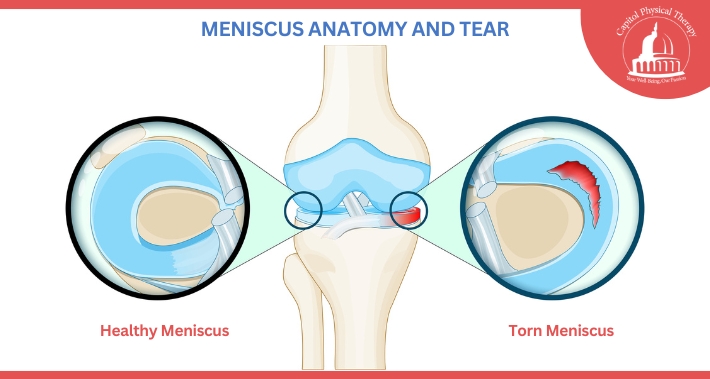
Your meniscus is one type of cartilage in your knee.
You have two menisci per knee: one on your inner knee and one on your outer knee.
They provide cushioning for the movement between your shinbone and thighbone.
Your menisci are also the site for a common injury.
According to a 2013 article by Frizziero et al., meniscus tears are one of the most common types of sports injuries.
Without intervention, they can lead to complications such as knee weakness, decreased range of motion, and chronic pain.
According to a 2022 article by Ozeka et al., meniscus tears can also bring about or worsen symptoms of osteoporosis.
RELATED ARTICLE: Physical Therapy Vs Opioids For Chronic Pain Relief
How Does A Meniscus Tear Feel?
Meniscus tears can feel different for everyone, and symptoms may also depend on the severity of your injury.
However, most people with this type of injury experience some degree of pain or inflammation.
These symptoms might not occur immediately.
People with small meniscus tears often don’t notice symptoms for at least 24 hours.
That’s why it’s important to take a break from all physical activity if you think you might have an injury.
If you have a meniscus tear, you might also notice that your pain worsens when you try and twist or turn your knee.
You might feel as though your knee is locked in place, and incapable of bearing any weight.
Some people also report feeling a popping sensation when they move their knee.
RELATED ARTICLE: What’s The Difference Between Sprains Vs Strains
What Is The Main Cause Of A Meniscus Tear?
Most people develop meniscus tears following some type of physical activity where they forcefully twist or turn their knees.
This is especially true for activities that put the stress of your full weight onto your knees, such as deep squatting and kneeling.
For this reason, being overweight or obese may increase your risk of developing a meniscus tear.
Your risk of developing this injury may also increase when you’re participating in sports that involve pivoting or sudden stops and turns, such as tennis, basketball, soccer, or skiing.
Athletes who participate in contact sports are also at a higher risk for meniscus tears.
Meniscus tears occur in people in all age groups.
However, they are particularly common in seniors.
This is because your knee strength degenerates as you age, which puts you at a higher risk of injury.
RELATED ARTICLE: Using Physical Therapy To Rebuild Strength
What Is The Best Physical Therapy For A Meniscus Tear?
There’s no single physical therapy technique that will work for everyone with a meniscus tear.
Everyone experiences knee injuries differently.
Thus, your physical therapist will put together an intervention plan that reflects your unique needs and symptoms.
At Capitol Physical Therapy, your physical therapist will first conduct an in depth evaluation to better understand the cause of your injury, as well as the severity of your symptoms.
This evaluation will help your therapist better understand the best ways to support your recovery going forward.
The overall goals of physical therapy for meniscus tears are to reduce your pain levels, strengthen your knee, and increase your range of motion.
We can also show you methods that will help you prevent future injuries.
Physical therapy can help some people with meniscus tears recover without surgical intervention.
However, if you do require surgical repair for your injury, post surgery recovery physical therapy can help.
The rest of this article will take a closer look at some of the specific types of exercise your physical therapist might use.
RELATED ARTICLE: Physical Therapy To Recover From Total Knee Replacement (TKR) Surgery
1. Range Of Motion Exercises
People with meniscus tears commonly experience a decrease in their knee’s range of motion.
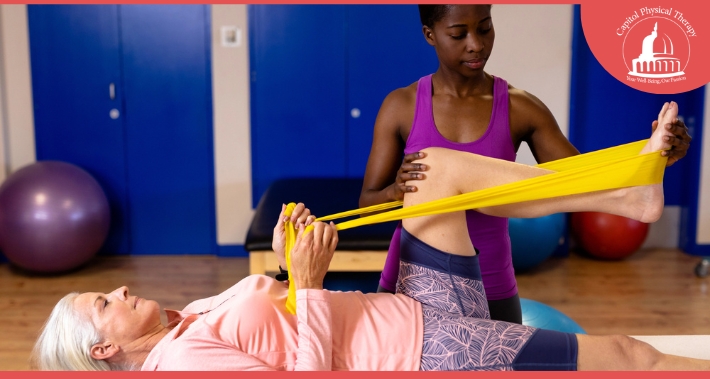
Your physical therapist can show you exercises to help gradually increase your range of motion in your knee.
These types of exercises typically focus on knee flexibility and movement.
Heel slides are one such example.
This exercise requires you to lay on your back and slowly slide your heels closer and closer to your bottom before bringing them back to the ground to rest.
This exercise encourages you to bend your knee, which in turn increases your range of motion.
The most important thing to remember is to go slowly; don’t force your knee to bend in a way that hurts.
When it comes to meniscus tear recovery, slow and steady wins the race.
2. Pain Management Therapy
Pain management is a crucial component for any physical therapy intervention plan.
After all, you’ll have a hard time doing any physical therapy exercises if you’re in a great deal of pain.
There are many different techniques we can introduce to help lower your pain levels.
Heat therapy is a common physical therapy technique used to support pain relief, reduce muscle tension, and improve flexibility.
While heat does not reduce inflammation — and can actually increase it in the early, acute stage — it can be highly beneficial once that initial phase has passed.
Applying heat with a hot pack can help relax tight muscles, increase blood flow, and improve range of motion as part of a later-stage rehabilitation plan.
We can also show you the RICE technique, which stands for rest, ice, compression, and elevation.
All these tools can help you reduce inflammation and subsequently improve your levels of pain.
RELATED ARTICLE: Physical Therapy Exercises For Runner’s Knee

3. Balance Exercises
Balance exercises for meniscus tears are important for both recovery and prevention of future injuries.
Balance challenges are common amongst people with meniscus tears.
This may occur for a variety of reasons.
For instance, your balance levels may naturally decrease due to periods of inactivity during recovery.
Working on increasing your balance can also help you avoid future injuries such as from slip and fall injuries.
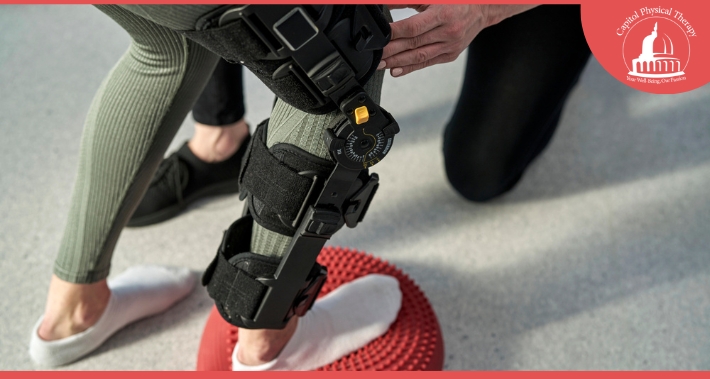
There are many different balance exercise your physical therapist can show you.
For instance, they might instruct you to balance on a single leg for as long as possible.
We can also introduce various tools to help you increase your balance, such as a BAPS board or a BOSU Ball.
Book Your Appointment With Our Physical Therapy Clinic Today
A meniscus tear can make everyday movement feel frustrating — but the right physical therapy plan can help you recover safely and confidently.
Whether you’re aiming to avoid surgery, rehabilitate after a procedure, or simply protect your knees from future injury, our clinic is here to support your goals.
At Capitol Physical Therapy, our physical therapists will create a personalized plan to reduce pain, restore mobility, and get you back to the activities you love.
Don’t let knee pain slow you down.
Book your appointment with Capitol Physical Therapy today and take the next step toward lasting relief.
1100 H St NW Suite 1100,
Washington, DC 20005
- https://g.page/capitolptdc
9560 Pennsylvania Ave. # 202,
Upper Marlboro, MD 20772
- https://goo.gl/maps/zjL4NnnuThRhrcS86
Capitol Physical Therapy offers orthopedic and other pain related solutions, with our versitile team of physical therapists in Washington, DC and Upper Marlboro, MD