
When you think about your legs, you probably picture the larger muscles — your calves, hamstrings, or quads.
But there’s another key player working hard behind the scenes: your Achilles tendon.
This strong band of tissue connects your calf muscles to your heel and plays a major role in walking, running, and keeping your balance.
Unfortunately, it’s also a common site for injury.
Pain, tightness, or tenderness in the back of your leg could be a sign of Achilles tendinopathy — a condition that affects people of all ages and activity levels.
In this article, we’ll take a closer look at what Achilles tendinopathy is, what causes it, and what you can do about it.
We’ll also explore how physical therapy can support your recovery and help you get back to moving comfortably.
Let’s dive in.
What Is Achilles Tendinopathy?
Tendinopathy is a medical term that describes any type of tendon deficiency.
Thus, Achilles tendinopathy refers to an injury that compromises the efficiency of your Achilles tendon.
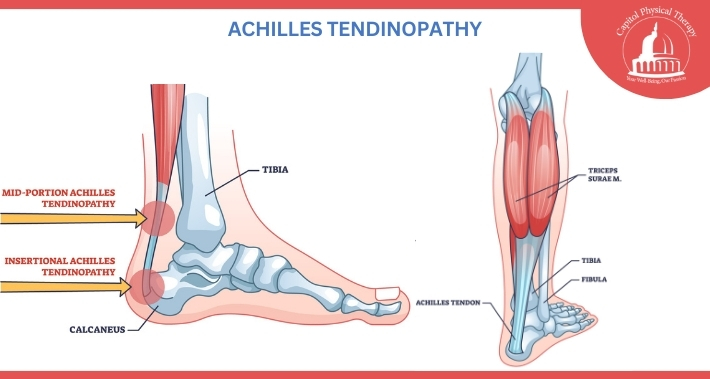
Your can find the approximate location of your Achilles tendon by running a finger up the back of your leg.
This strip of tissue connects your calf muscles to your heel and helps support your weight as you walk.
It also helps control your ankle positioning.
Subsequently, people with Achilles tendinopathy face challenges with various types of movements, including walking and running.
How To Tell If You Have Achilles Tendinopathy?
This condition can look different for everyone.
Chronic pain is one of the most common characteristics of Achilles tendinopathy.
Most people report varying degrees of pain just above their heel, in their Achilles tendon.
However, you might also experience pain or tenderness higher up your calf, especially when you apply pressure to your leg.
Your pain levels might increase when walking, during physical activity, or when flexing your foot muscles.
Muscle tightness and inflammation are also common signs.
What Causes Achilles Tendinopathy?
Simply speaking, Achilles tendinopathy occurs due to excess physical demand.
In other words, you might develop this condition if you place more demand on your Achilles tendon than it can handle.
Many different factors can contribute to this.
For instance, some people experience chronic tendinopathy due to repetitive strain injuries, such as during sports.
Others experience acute Achilles tendinopathy following a single accident or injury, such as a slip or fall.
This condition can develop regardless of your age; however, it’s most common between age 35 and 55.
In addition, certain factors may increase your odds of developing Achilles tendinopathy, including:
- Muscle tightness or weakness
- Poor range of motion in your ankle
- Low quality footwear
- A sudden change in your exercise regime
- Improper foot alignment (gait training can help)
RELATED ARTICLE: What’s The Difference Between Sprains Vs Strains
What’s The Difference Between Achilles Tendonitis And Achilles Tendinopathy?
You might see Achilles tendonitis referred to by other names as well.
For example, this Virginia podiatrist treats Achilles tendonitis.
Meanwhile, this Las Vegas orthopedic surgeon treats Achilles tendinosis.
This is all essentially the same condition.
Each describes a medical condition that causes pain and limited range of motion.
The main difference is in the language.
When you see a condition with the ending “-itis”, it means an area is inflamed.
So the name “tendinitis” focuses on the inflammation.
Meanwhile, “-opathy” and “-osis” focus on the degeneration of tissue in the area.
Whether you have tendinopathy or tendinitis depends on how your Achilles tendon pain developed.
However, the symptoms are largely the same.
RELATED ARTICLE: How Physical Therapy Can Help Reduce Inflammation And Improve Mobility
How Serious Is Achilles Tendinopathy?
Achilles tendinopathy can range in severity.
Some people only experience mild pain and other manageable symptoms.
Others experience debilitating pain that prevents them from participating in daily life.
The severity may also depend on the progression of your condition.
Seeking treatment as early as possible will help ensure your symptoms don’t gradually worsen.
Without treatment, Achilles tendinopathy can increase your risks of developing chronic complications.
This can include limited mobility and tendon tears or ruptures.
Physical therapy can help you avoid these complications and the subsequent need for surgical intervention.
How Do You Fix Achilles Tendinopathy?
Your physical therapist may use a variety of techniques that can provide you with some relief from your Achilles tendinopathy pain and prevent future injuries.
During your first appointment, your therapist will look at your specific needs in order to create an individualized intervention plan.
They can also discuss some of the factors that may have contributed to your injury, including health history, exercise regime, and type of footwear.
Depending on your unique situation, your physical therapist may incorporate some or all of the following techniques.
1. Pain Management
Pain management is the initial goal of most physical therapy intervention plans.
It’s important to get your pain levels under control before working on improving your strength and mobility.
There’re many different natural methods a physical therapist may utilize to alleviate your pain and discomfort.
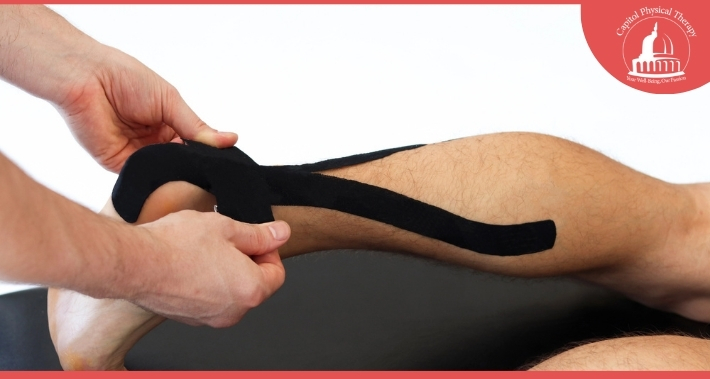
For instance, they can show you how to apply heat and cold techniques to help pain or tape your injury to reduce inflammation.
A physical therapist can also perform ultrasounds that can significantly lower your pain levels and reduce the need for opioid medications.
2. Improving Range Of Motion
Limited range of motion is one of the most common complaints among people with Achilles tendinopathy.
Fortunately, physical therapists are movement experts and can help you restore the full use of your foot, ankle, and calf muscles.
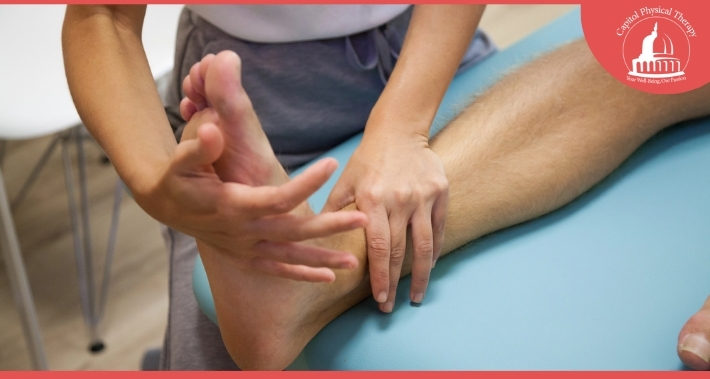
Your therapist will show you the most effective movement techniques to help increase your range of motion.
For instance, they might show you a collection of stretches that you can perform in between appointments.
3. Rebuilding Strength
Achilles tendinopathy often occurs due to weakened calf muscles.
Therefore, increasing your muscular strength is an important component of both Achilles tendinopathy intervention and prevention.
Your strength building exercise plan will reflect your unique situation and start slow before gradually building in intensity.
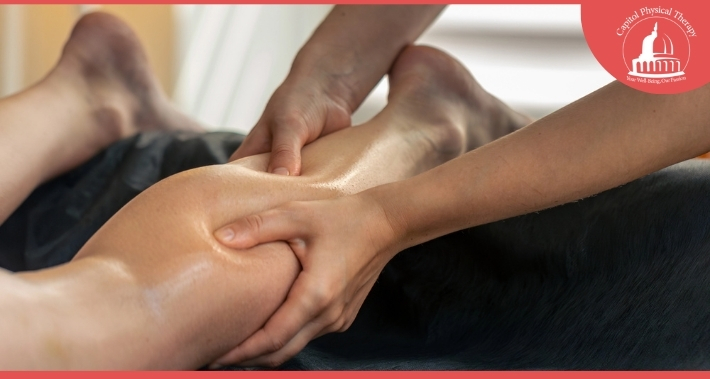
4. Soft Tissue Manipulation
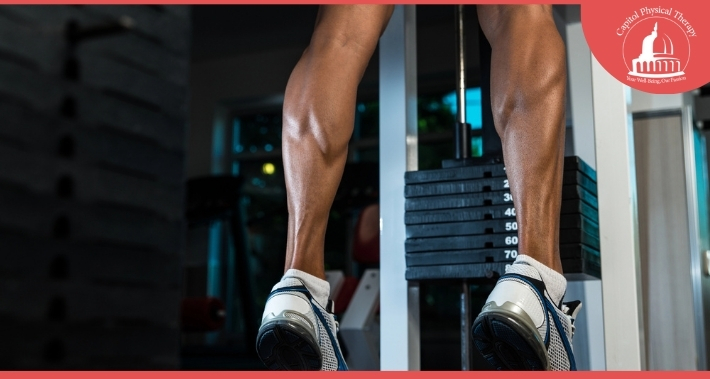
Soft tissue manipulation includes many different types of hands-on techniques that can help encourage your muscles and joints to move effectively.
For instance, your physical therapist might slowly move your ankle and calf muscles in a way that promotes optimal range of motion and function.
Soft tissue manipulation is particularly helpful in the early stages of your physical therapy treatment when you might not be able to move all your muscles on your own.
5. Patient Education
Finally, patient education is a critical aspect of any physical therapy intervention plan.
It’s important that you fully understand the factors that may have led to your injury in order to prevent future flare ups.
Your physical therapist can help you determine these factors.
For instance, they can look at the type of footwear you use and exercise methods.
If necessary, your physical therapist can recommend alternatives that will help prevent future injuries.
How Long Does It Take For Achilles Tendinopathy To Heal?
Like many other aspects of Achilles tendinopathy, recovery times may vary.
More severe cases typically take longer to heal and require more intensive treatments.
That’s why seeing a physical therapist as soon as you notice symptoms is so important.
The sooner you seek treatment, the sooner your therapist can get you back on your feet.
On average, you can expect to see results from your physical therapy sessions in approximately 3 to 6 months.
Book Your Appointment With Our Physical Therapy Clinic Today
Achilles tendinopathy can interfere with everything from walking comfortably to enjoying the activities you love — but it doesn’t have to.
At Capitol Physical Therapy, our team of PTs create personalized treatment plans to reduce pain, restore strength, and improve mobility in your foot and ankle.
Whether you’re recovering from a recent injury or managing chronic symptoms, our expert team is here to support your healing every step of the way.
With two convenient clinic locations in Washington, DC, and Upper Marlboro, MD, expert care is always close by.
Book your appointment with Capitol Physical Therapy today and take the first step toward lasting relief.
1100 H St NW Suite 1100,
Washington, DC 20005
- https://g.page/capitolptdc
9560 Pennsylvania Ave. # 202,
Upper Marlboro, MD 20772
- https://goo.gl/maps/zjL4NnnuThRhrcS86
Capitol Physical Therapy offers orthopedic and other pain related solutions, with our versitile team of physical therapists in Washington, DC and Upper Marlboro, MD