
Core muscle injuries can be frustrating — especially when they interfere with your ability to move, train, or stay active.
Whether it happens suddenly during a twist or develops gradually from overuse, this type of injury can lead to ongoing pain in your lower abdomen or groin that’s hard to ignore.
For athletes and active individuals, it can mean time away from the activities you enjoy most.
The good news is that with the right approach, recovery is absolutely possible — and understanding what’s going on is the first step.
In this article, we’ll take a closer look at:
- What a core muscle injury is and where it occurs
- Common causes and risk factors
- Signs and symptoms to watch for
- And how physical therapy can help you recover and return to activity safely
If you’ve been dealing with persistent groin or lower abdominal pain, this guide will help you better understand your options and next steps.
Let’s dive in.
What Is A Core Muscle Injury?
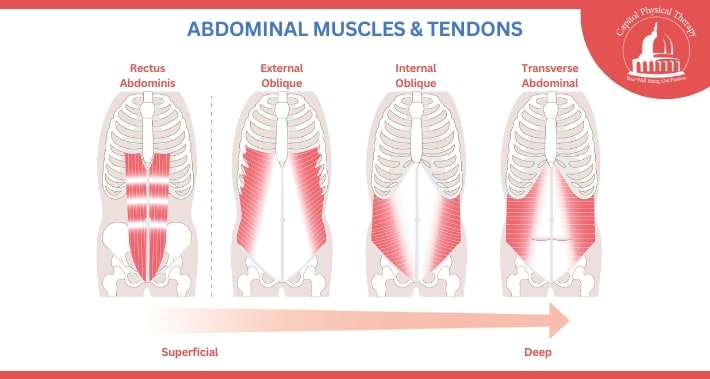
A core muscle injury is the result of soft tissue damage, typically a tear, to the deep layers of the abdominal wall.
The injury affects muscles or tendons in your lower abdomen or groin, particularly where they attach to the pelvis.
RELATED ARTICLE: Getting a Better Understanding of Your Pelvic Floor
As a result, it can cause chronic pain and interfere with your mobility and physical performance.
Core muscle injuries commonly affect:
- The oblique muscles in your lower abdomen
- The tendons that connect oblique muscles to your pelvis
- The tendons attaching your thigh muscles to your pelvis
It’s also possible to experience nerve irritation with this type of injury, which can further contribute to pain and sensitivity in the affected area.
Physical therapy can help with the chronic pain, but more on that later.
What Causes Core Muscle Injuries?
Core muscle injuries can happen to anyone.
However, they’re most commonly associated with sports and running injuries.
This is because they happen most often to athletes performing repetitive hip and pelvic motions.
RELATED ARTICLE: Common Causes Of Pelvic Foor Dysfunction
These motions, particularly twisting your pelvis, are common in sports such as:
- Soccer
- Skiing
- Wrestling
- Ice hockey
- Rugby
- Tennis
RELATED ARTICLE: Physical Therapy for Tennis Elbow
Core muscle injuries can result from gradual stress and overuse.
They may also be caused by sudden changes in direction or severe twisting motions.
Factors that can increase your risk of experiencing a core muscle injury may include:
- Improperly warming up before exercising
- Excessive and unsafe abdominal and hip exercises
- Weakness in abdominal muscles
- Lack of physical conditioning
- Strength imbalances between abdominal muscles and your hip
- Forceful and repetitive hip motions, like twisting, jumping, and kicking
RELATED ARTICLE: Using Physical Therapy To Rebuild Strength
How To Tell If You Have Core Muscle Injuries
The main symptom of a core muscle injury is chronic pain in your lower abdomen or groin region.
Pain is typically most intense during physical activity and motion.
However, you may also feel pain doing basic tasks, such as sitting up.
Signs and symptoms of a core muscle injury to watch out for can include:
- Sudden, intense pain when you get injured
- Sharp or stabbing pain in the lower abdomen or groin area
- Pain or numbness radiating in the inner thigh
- Pain in the groin when sneezing or coughing
- Minimal pain when resting or sitting
- Tenderness when touching or putting pressure on the lower abdominal region
- Pain on one side of the groin
- Difficulty pinpointing exact point of pain
- Pain intensifies with strenuous physical activity
- Chronic pain that feels dull or has a burning sensation
Pain typically goes away with rest and returns with physical activity.
However, the pain you experience may force you to stop participating in sports or reduce your mobility.
Can You Avoid Core Muscle Injuries?
It can be challenging to avoid core muscle injuries if you participate in certain sports, especially at a high level.
The stress and strain on your pelvis and hips from certain physical activities can accumulate and lead to injury.
However, if you’re engaged in athletic activities, there are preventative measures you can take to decrease your risk.
This can include dedicated exercise programs to:
- Strengthening your abdominals and core
- Strengthening your hip muscles
- Improving your flexibility and decreasing muscle strain
Exercises like yoga or Pilates can help.
A physical therapist can help you identify the right prevention program for your needs.
Additionally, if you experience a core muscle injury, a physical therapist can help.
RELATED ARTICLE: How Physical Therapy Can Help Reduce Inflammation And Improve Mobility

How Can A Physical Therapist Help With Core Muscle Injuries?
If you have, or suspect you have, a core muscle injury, a physical therapist can help.
Your physical therapist will start by conducting a full evaluation to determine the severity of your injury and assess factors such as:
- Previous hip, groin, or lower back injuries
- If there is any pain while performing physical movements
- How recently you did core or abdominal exercises
- If you feel better when resting
- If there was a specific instance in which you felt pain
- If the pain is limiting your physical mobility
They’ll also perform a series of tests to measure the strength and flexibility of your hip and thigh muscles, as well as examine the movements of your hip and lower back.
From there, they’ll develop a tailored treatment plan to help you return to your normal activity levels.
Initially, rest and ice can help manage symptoms before starting physical therapy.
Physical therapy will address specific issues discovered in your evaluation and may include treatment strategies such as:
- Modified sport or training activities
- Icing and compression therapy
- Abdominal and hip muscle stretching and conditioning
- Targeted muscle exercises
- Manual therapy
- Return to sport or activity programs
- Recommendations on anti-inflammatory medications
- Dry needling
RELATED ARTICLE: Top 5 Conditions Dry Needling Can Help With
If groin pain persists for several months after the injury, you may require surgical intervention.
The type of surgery depends on which muscles or tendons were affected and the severity of the injury.
A physical therapist can help with post-surgery recovery by putting together a treatment plan to help you regain your strength and flexibility.
Ultimately, physical therapy for core muscle injuries aims to relieve pain, restore range of motion and strength, and help you return to your typical activities.
Book Your Appointment With Our Physical Therapy Clinic Today
A core muscle injury can disrupt your routine, limit your performance, and make even simple movements uncomfortable — but the right treatment can help you get back on track.
With a personalized physical therapy plan, you can reduce pain, rebuild strength, and restore the stability your body needs to move confidently again.
At Capitol Physical Therapy, our team of physical therapists will guide you every step of the way so you can safely return to the activities you enjoy.
Book your appointment with Capitol Physical Therapy today and take the first step toward a stronger, more resilient core.
1100 H St NW Suite 1100,
Washington, DC 20005
- https://g.page/capitolptdc
9560 Pennsylvania Ave. # 202,
Upper Marlboro, MD 20772
- https://goo.gl/maps/zjL4NnnuThRhrcS86
Capitol Physical Therapy offers orthopedic and other pain related solutions, with our versitile team of physical therapists in Washington, DC and Upper Marlboro, MD