You look at your lap every day but when was the last time you thought about the bone that holds it all together?
That strong, solid bone running through your thigh is your femur.
It’s the longest and strongest bone in your body — built to carry your weight, support your movements, and keep you balanced as you go about your day.
But just because it’s tough doesn’t mean it’s invincible.
From fractures and falls to joint pain and osteoporosis, your femur can still run into trouble.
And when it does, you may notice it getting harder to move the way you want to.
Here at Capitol Physical Therapy, we help people stay strong, mobile, and confident in their movement — whether you’re recovering from an injury, managing a condition like osteoporosis, or just want to prevent problems down the road.
In this article, we’ll take a closer look at:
- What your femur actually does
- Where it’s located and how big it is
- Common medical issues that affect your femur
- And how you can keep it strong and healthy
Let’s get to know your femur and why it’s such a big deal when it comes to staying active and pain-free.
What Is Your Femur?
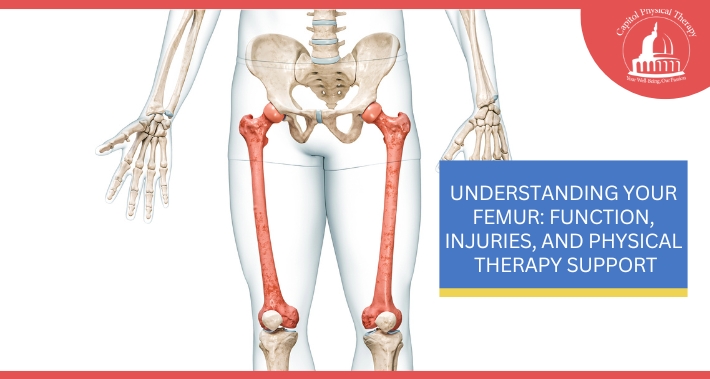
Your femur has two claims to fame – it is both the longest bone in your body and the strongest.
Without your femur you would find it difficult to balance and move properly.
Your femur has two rounded ends and a long shaft that connects them together.
It’s made up of a few different parts, including the upper (or proximal) femur that connects to at your hip joint and the lower (or distal) femur that connects to a part of your knee joint.
Your femur plays a role connecting important tendons and ligaments in your body, and participates in your circulatory system.
Where Is Your Femur?
If you have both legs, you’ll also have both femurs.
They’re located in your thigh, which only has the one bone.
It connects to your knee at your tibia and kneecap (or patella) and to your hip joint.
The long part of your femur that forms most of your thigh is called the femur shaft.
What Does Your Femur Do?
Your femur has a variety of tasks that help you with your every day functioning.
It helps keep you balanced and stabilized.
Your femur holds your weight as you move and stand and connects your muscles and ligaments in your knees and hips to your body.
Not only are your tendons and ligaments supported by your femur, but so is your circulatory system.
How Large Is Your Femur?
At around 18 inches (the average size of an adult femur), your femur is your largest bone in your body.
It’s also strong – it can hold 30 times your body weight.
Think about how long your leg is, and then remember that this is the longer part of it.
Common Health Issues With Your Femur
Your femur should be pretty sturdy, but certain health conditions can leave them with a weakness you might not have even known you had.
This can lead to an increased risk of fracturing your femur, which is usually not a common part of your body to have a break.
Aside from fractures from accidents, osteoporosis and patellofemoral pain syndrome are common issues that could cause weakness in your femur.
Let’s talk more about these.
1. Osteoporosis
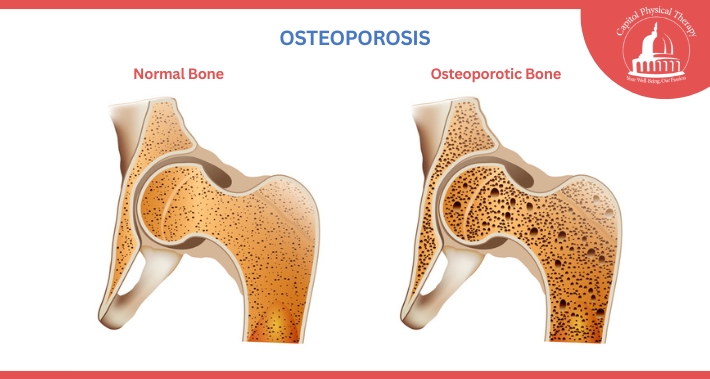
Osteoporosis is known to cause weakness in your bones.
Often there won’t be noticeable symptoms of osteoporosis until you have an accident and your bone breaks.
That’s why it’s a good idea to get screened for osteoporosis, especially if you’re at higher risk for it.
You may need a bone density screening to confirm you have osteoporosis.
These tests are sometimes called DEXA or DXA, and they’ll measure your bone density using X-rays.
Osteopenia, a precursor condition to osteoporosis, can also affect your femur.
RELATED ARTICLE: Frequently Asked Questions About Osteoporosis
2. Patellofemoral Pain Syndrome
Patellofemoral pain syndrome (PFPS) is the name of the syndrome that means you have pain under your kneecap.
Other names for patellofemoral pain syndrome are jumper’s knee or runner’s knee.
Symptoms might include pain when you bend over, popping sounds in your knees when you’re moving them, or pain that increases when your activity increases.
Your femur is attached to your patella (kneecap), making PFPS a condition that could affect your whole body.
RELATED ARTICLE: Why Do Your Legs Hurt?
3. Broken Femur
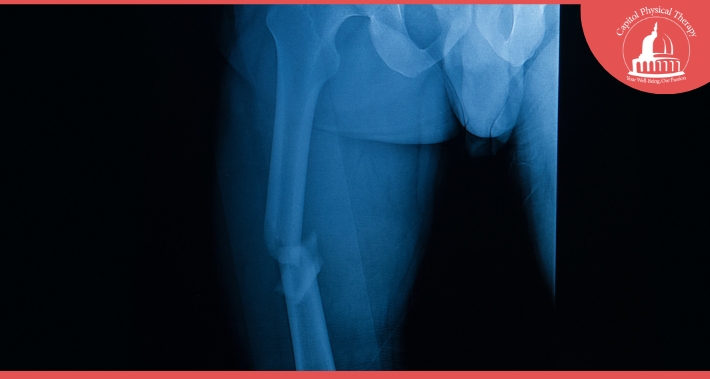
Your femur wouldn’t usually break unless the accident is severe, like a slip and fall or a car accident, because it’s so strong.
If you break your femur, you’ll know right away – it causes immediate, severe pain.
How To Keep Your Femur Healthy
To keep your femur healthy, it’s a good idea to make sure you’re in overall good health, keeping up with your daily exercise, and following a good diet.
Keep an eye on whether or not your family has a history of osteoporosis, and if you’re over 50 know that you are at increased risk.
RELATED ARTICLE: Reduce The Risk Of Falls & Learn Fall Recovery In Seniors
You’ll also want to be careful to avoid injury, as that’s your biggest risk for getting a fracture.
Wear your seatbelt when you’re in a vehicle, and always wear the correct protective equipment when working or playing sports.
If you have difficulty with mobility make sure you keep your walker and cane accessible.
Book Your Appointment With Our Physical Therapy Clinic Today
Your femur plays a vital role in nearly every step you take — literally.
Keeping it strong and supported can help you stay mobile, prevent injury, and reduce pain, especially as you age or manage conditions like osteoporosis or joint pain.
At Capitol Physical Therapy, we’re here to help you maintain bone health, improve mobility, and recover from injuries with care tailored to your body’s needs.
Whether you’re dealing with a current issue or want to stay proactive, our team is ready to support you.
Book your appointment with Capitol Physical Therapy today and give your femur the care it deserves.
1100 H St NW Suite 1100,
Washington, DC 20005
- https://g.page/capitolptdc
9560 Pennsylvania Ave. # 202,
Upper Marlboro, MD 20772
- https://goo.gl/maps/zjL4NnnuThRhrcS86
Capitol Physical Therapy offers orthopedic and other pain related solutions, with our versitile team of physical therapists in Washington, DC and Upper Marlboro, MD